
 When you cut into an active shop floor, there’s no hiding what comes next. The slab is either put back stronger and smarter, or the space turns into a long-running headache for everyone who works around it. On this Cleveland, OH project, our team at ALBA Contractors, Inc. was brought in to install an industrial machine foundation, and the photos tell the story from floor opening to formed, reinforced concrete ready to carry serious loads.
The Job Started With a Clean Floor Cut and Controlled Demolition
Inside an existing industrial building, we began by sawcutting a large rectangular section of the concrete slab. That step matters because straight, deliberate cuts protect the surrounding floor from random cracking and leave clean edges for tie-in work later.
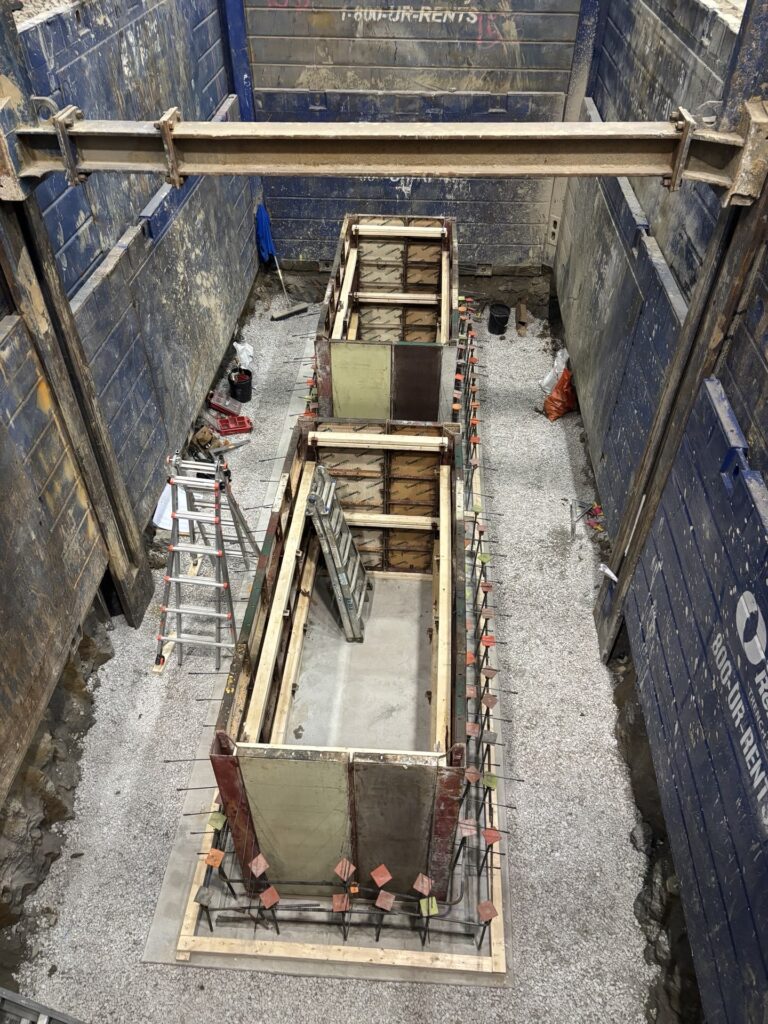
Once the slab section came out, we excavated below the concrete floor to create a long, trench-like pit sized for the new foundation footprint. The space wasn’t shallow, and the excavation walls needed support to stay stable and safe.
Shoring Went in to Keep the Excavation Safe and Stable
You can see a trench box system in place along both sides of the excavation. That shoring keeps the walls supported while crews work below the slab level. It also helps maintain the excavation shape so the concrete foundation can be built to the intended footprint without sloughing soil or constant rework.
In older industrial areas around Cleveland, ground conditions can change fast across a short distance. Adding an indoor excavation next to an existing slab edge, and controlling the excavation becomes a key part of quality, not only safety.
Wet Conditions Showed Up, so Base Prep Mattered Even More
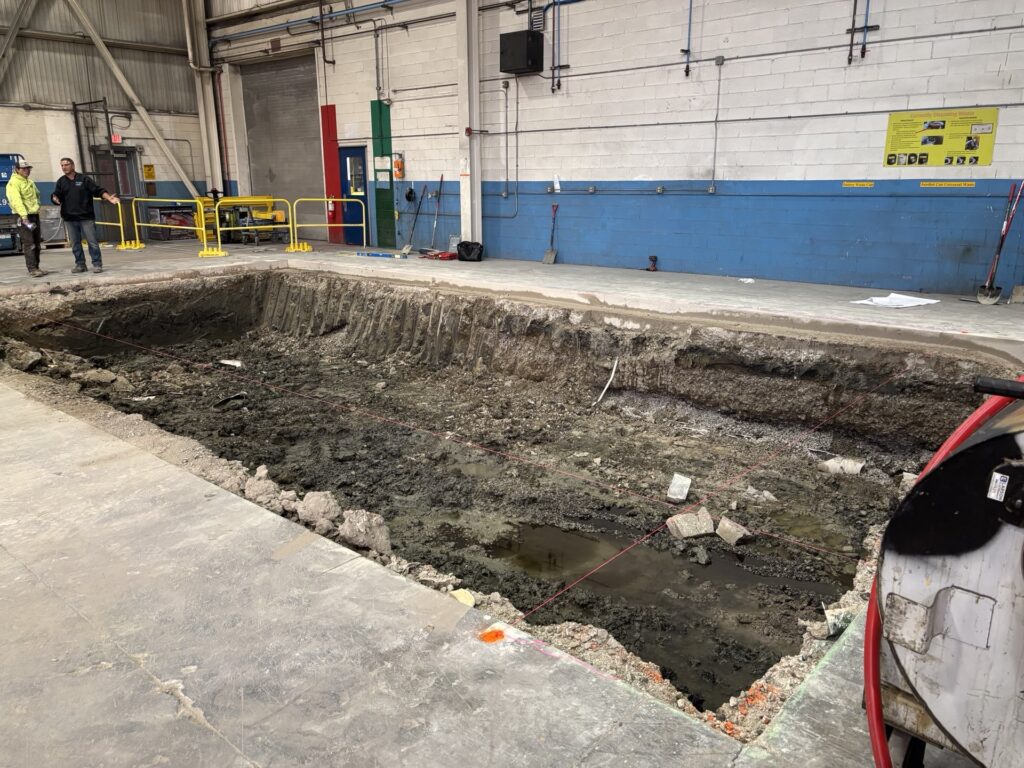
The open excavation photo shows standing water and muddy soil at the bottom of the pit.
That kind of moisture is common in Northeast Ohio, especially when groundwater or drainage paths intersect a dig. Wet subgrade can compromise bearing if it’s ignored, so the next visible step is important.
After excavation, we placed a stone or gravel base across the work area.
You can see the light gray aggregate surrounding the formed foundation zone. A stable granular base supports the pour, helps with drainage in the foundation zone, and provides a clean working concrete surface for layout and reinforcing steel.
Reinforcing Steel and Forms Created the Foundation Shape
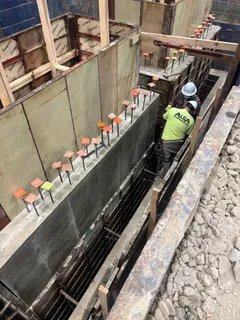 With the excavation stabilized and base material in place, we installed reinforcing steel. The photos show rebar around the perimeter and projecting steel with safety caps. Those capped ends are a small detail that signals a jobsite focused on safe sequencing.
Then we built the formwork for the machine foundation components.
Two large rectangular sections are aligned in a straight run, consistent with a machine foundation layout where concrete mass and stiffness are used to support equipment and limit movement.
One section shows a finished concrete placement inside the form, while the other appears staged for a future pour, indicating phased placement and careful sequencing inside a working facility.
A Purpose-Built Foundation Zone Ready for Equipment Support
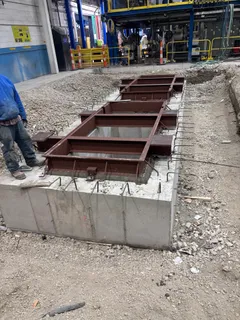 From what’s visible, the floor was opened cleanly, the excavation was shored, wet conditions were managed through base preparation, rebar was installed, forms were set, and at least one concrete placement was completed with additional sections prepared.
That’s the core workflow for installing an industrial machine foundation inside an existing Cleveland building without letting the surrounding floor and operations take the hit.
Need an Industrial Machine Foundation in Cleveland, OH?
If you’re planning new equipment, a line relocation, or a facility upgrade in Cleveland, we can walk the site, review the foundation area, and help you plan a safe, buildable approach for a machine foundation inside an existing slab.
Call us to schedule an on-site visit and request a quote so you can lock in a foundation plan before equipment delivery dates start driving the schedule.